

Imagine the delightful crunch of fresh cabbage mingling with tender strands of roasted spaghetti squash, all enveloped in a savory sauce that dances on your tongue. The sweet notes of maple syrup and the umami richness of soy sauce create a flavor explosion that’s both comforting and exciting.
I remember the first time I encountered spaghetti squash. I was convinced I’d accidentally ordered a fancy autumn decoration instead of my dinner. But one taste, and I was hooked! Who knew a vegetable could be such a superstar? Now, it’s my go-to for impressing friends and family, all while keeping things healthy and delicious.
Reasons Why You’ll Love This Recipe
This Quick & Healthy Spaghetti Squash Stir-fry is not just easy to whip up but also features a unique flavor profile that will tantalize your taste buds. The vibrant colors make it visually stunning, while its versatility allows you to customize it with your favorite veggies or proteins. Whether you’re cooking for one or entertaining guests, this dish promises satisfaction on every plate.
Ingredients
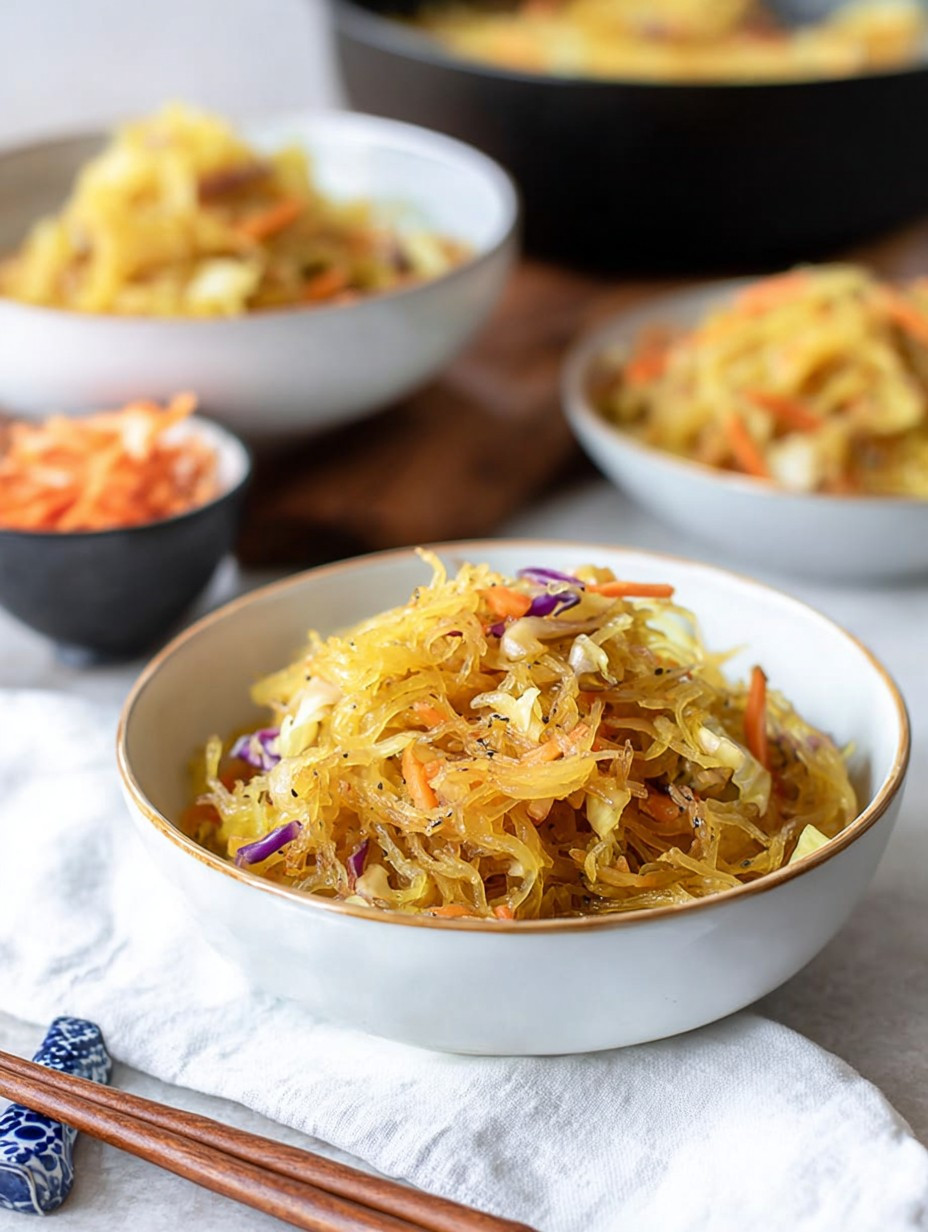
Here’s what you need for this delicious dish:
– **1 medium spaghetti squash (about 2-3 pounds)**: Choose one that feels heavy for its size and has a firm skin; it should sound hollow when tapped.
– **1 tablespoon olive oil, plus more for squash**: Extra virgin olive oil brings richness; just drizzle a bit to coat the squash before roasting.
– **1 cup shredded green cabbage**: This adds crispness and color; look for vibrant green leaves without wilting.
– **1/2 cup shredded red cabbage**: Provides an eye-catching contrast and a slightly peppery flavor; fresh is best!
– **1 cup shredded carrots**: Sweet and crunchy, they add texture; choose bright orange ones for maximum freshness.
– **1/2 small yellow onion, thinly sliced**: For sweetness and depth; pick one that feels firm with dry skin.
– **2 cloves garlic, minced**: A must-have for aromatic punch; opt for fresh cloves rather than pre-minced.
– **1 teaspoon grated fresh ginger**: Adds warmth and spice; use a microplane grater for the finest texture.
– **2 tablespoons low-sodium soy sauce (or tamari for gluten-free)**: This is the heart of your sauce—look for good quality to enhance flavor.
– **1 tablespoon rice vinegar**: Brightens everything up with its tanginess; choose a mild variety.
– **1 teaspoon sesame oil**: Just a little goes a long way in adding nutty flavor; keep it on hand as a staple.
– **1 teaspoon maple syrup or honey**: A touch of sweetness balances the dish beautifully—pure maple syrup is always preferred!
– **1/2 teaspoon cornstarch (optional, for thicker sauce)**: If you like your sauce thicker, this is your friend—just mix it well before adding.
– **1/4 cup water or vegetable broth**: Use broth for extra flavor; either works well to achieve the right sauce consistency.
– **Salt and black pepper to taste**: Essential seasonings—don’t skip these!
– **1 teaspoon sesame seeds, for garnish (optional)**: Adds visual appeal and crunch at the end!
Step-by-Step Instructions
Here’s a simple guide to help you prepare this delicious recipe:
Step 1: Prepare the Oven and Squash
Preheat your oven to 400°F (200°C). Carefully cut the spaghetti squash in half lengthwise and scoop out the seeds. Drizzle the cut sides with olive oil, season with salt and pepper, then place them cut-side down on a baking sheet. Roast those beauties in the oven for 30-45 minutes until they are tender when pierced with a fork.
Step 2: Scrape Squash into Strands
Once cool enough to handle, grab a fork and scrape the flesh into spaghetti-like strands. Set aside those lovely strands while you work on the rest.
Step 3: Make the Sauce
While your squash roasts away, prepare the sauce. In a small bowl, whisk together soy sauce, rice vinegar, sesame oil, maple syrup, cornstarch (if using), and water or vegetable broth. Set this flavorful mixture aside as it’s going to bring everything together!
Step 4: Sauté Onions
Heat 1 tablespoon of olive oil in a large skillet or wok over medium-high heat. Toss in that sliced onion and cook for about 2-3 minutes until softened—your kitchen should smell divine by now!
Step 5: Add Garlic and Ginger
Next up! Add minced garlic and grated ginger to the skillet. Cook these aromatic wonders together for another minute until they become fragrant—this is where magic happens!
Step 6: Stir-Fry Vegetables
Stir in your colorful mix of shredded green cabbage, red cabbage, and carrots. Cook these vibrant vegetables for about 5-7 minutes while stirring frequently until they’re crisp-tender—a feast for both eyes and tummy!
Step 7: Combine Sauce with Vegetables
Pour your prepared sauce over those sautéed veggies. Bring everything to a gentle simmer while stirring constantly until it thickens slightly (if you opted for cornstarch).
Step 8: Incorporate Spaghetti Squash
Now it’s time! Add those cooked spaghetti squash strands into your skillet. Toss gently to combine all ingredients while making sure everything gets evenly coated with that heavenly sauce. Cook all together for another 2-3 minutes just to heat through.
Step 9: Taste & Serve
Give everything one final taste! Adjust seasoning if needed before serving immediately. Garnish with sesame seeds if desired—you deserve all the presentation points!
Enjoy this irresistible Quick & Healthy Spaghetti Squash Stir-fry right away while it’s hot! It’s light yet satisfying—a meal that proves healthy can also be incredibly delicious!
Perfecting the Cooking Process
To achieve the best results with this vibrant dish, start by roasting the spaghetti squash first. This allows it to cool while you prepare the flavorful sauce and stir-fry the veggies. Timing is everything for that perfect texture!
Add Your Personal Touch
Feel free to swap in other vegetables like bell peppers or snap peas for a crunchy twist! If you’re feeling adventurous, add cooked chicken or tofu during step eight for a protein boost that’ll have your taste buds dancing.
Storage & Reheating
To keep this dish fresh, store the spaghetti squash strands and vegetable stir-fry separately in airtight containers. This way, when you reheat, both elements maintain their delightful textures without turning mushy!
Helpful Chef Tips
I vividly remember making this recipe for my family during a cozy movie night. The aroma filled the house, and everyone was hooked from the first bite!
Final Thoughts
This Quick & Healthy Spaghetti Squash Stir-fry is a delightful and nutritious twist on a classic dish, offering a satisfying combination of flavors and textures. With the tender strands of roasted spaghetti squash mingling with crisp vegetables and a savory sauce, every bite is both refreshing and hearty. Not only is this meal simple to prepare, but it’s also packed with essential nutrients. Don’t wait any longer—try making this vibrant stir-fry for your next meal and enjoy the delicious benefits of fresh ingredients. Your taste buds will thank you!
Print
Quick & Healthy Spaghetti Squash Stir-fry
- Total Time: 1 hour 5 minutes
- Yield: 4 1x
Description
This dish offers a vibrant and flavorful take on classic chow mein, utilizing tender spaghetti squash strands as a delightful alternative to traditional noodles. Roasted spaghetti squash is combined with crisp-tender shredded cabbage and carrots, all tossed in a savory, umami-rich sauce. The preparation involves roasting the squash until perfectly tender, then stir-frying the vegetables and sauce before gently incorporating the squash strands. This results in a light yet satisfying meal with a harmonious blend of sweet and savory notes, and a pleasing texture contrast.
Ingredients
- 1 medium spaghetti squash (about 2–3 pounds)
- 1 tablespoon olive oil, plus more for squash
- 1 cup shredded green cabbage
- 1/2 cup shredded red cabbage
- 1 cup shredded carrots
- 1/2 small yellow onion, thinly sliced
- 2 cloves garlic, minced
- 1 teaspoon grated fresh ginger
- 2 tablespoons low-sodium soy sauce (or tamari for gluten-free)
- 1 tablespoon rice vinegar
- 1 teaspoon sesame oil
- 1 teaspoon maple syrup or honey
- 1/2 teaspoon cornstarch (optional, for thicker sauce)
- 1/4 cup water or vegetable broth
- Salt and black pepper to taste
- 1 teaspoon sesame seeds, for garnish (optional)
Instructions
- Preheat oven to 400°F (200°C). Carefully cut the spaghetti squash in half lengthwise and scoop out the seeds. Drizzle the cut sides with a little olive oil, season with salt and pepper, and place cut-side down on a baking sheet. Roast for 30-45 minutes, or until tender when pierced with a fork.
- Once cool enough to handle, use a fork to scrape the flesh into spaghetti-like strands. Set aside.
- While the squash roasts, prepare the sauce: In a small bowl, whisk together soy sauce, rice vinegar, sesame oil, maple syrup, cornstarch (if using), and water or vegetable broth. Set aside.
- Heat 1 tablespoon of olive oil in a large skillet or wok over medium-high heat. Add the sliced onion and cook for 2-3 minutes until softened.
- Add the minced garlic and grated ginger to the skillet and cook for another minute until fragrant.
- Stir in the shredded green cabbage, red cabbage, and carrots. Cook for 5-7 minutes, stirring frequently, until the vegetables are crisp-tender.
- Pour the prepared sauce over the vegetables and bring to a gentle simmer, stirring constantly, until the sauce thickens slightly (if using cornstarch).
- Add the cooked spaghetti squash strands to the skillet. Toss gently to combine all ingredients and coat the squash and vegetables evenly with the sauce. Cook for 2-3 minutes to heat through.
- Taste and adjust seasoning if needed. Serve immediately, garnished with sesame seeds if desired.
Notes
For a quicker method, spaghetti squash can be cooked in the microwave. Pierce the squash several times, microwave whole for 10-15 minutes, then cut and scrape.
Feel free to add other vegetables like bell peppers, snap peas, or mushrooms for variety.
To add protein, incorporate cooked chicken, shrimp, or tofu during step 8.
This dish can be prepared ahead of time and reheated gently on the stovetop or in the microwave.
Ensure the spaghetti squash is not overcooked to maintain a pleasant, slightly firm texture.
- Prep Time: 20 minutes
- Cook Time: 45 minutes
Nutrition
- Calories: 180
- Fat: 7g
- Carbohydrates: 28g
- Protein: 5g
FAQs
How can I cook spaghetti squash faster?
For a quicker method, you can cook the spaghetti squash in the microwave. Simply pierce the squash several times and microwave it whole for 10-15 minutes. Once it’s cool enough to handle, cut it open, scoop out the seeds, and scrape the flesh into strands.
Can I add more vegetables to this stir-fry?
Absolutely! Feel free to incorporate additional vegetables like bell peppers, snap peas, or mushrooms during the cooking process. Just ensure they are added along with the cabbage and carrots to achieve that perfect crisp-tender texture.
How do I store leftovers from this dish?
Leftovers can be stored in an airtight container in the refrigerator for up to three days. To reheat, gently warm them on the stovetop or in the microwave until heated through.
What protein options can I include in this recipe?
To add protein, consider incorporating cooked chicken, shrimp, or tofu during step 8 when tossing everything together. This addition will enhance the dish’s heartiness while keeping it healthy and satisfying.